“Her Truth”
Activation Date: Age 7 (Father’s death)
Mode: No Witness, No Continuity, No Memory of Self
Core Outcome: A child walks alone into adulthood

Phase 1: The Break (Ages 7–10)
Goal: Survival in the Absence of Support
Age 7 (The Shattering): Her father—the man she called her “ride or die,” her “comfort,” her “solitude”—dies suddenly. A first-grade photo shows a normal girl with a backpack. She enters foster care.
- No one preserves his voice.
- No one records what she loved.
- No one anchors her identity.
- Her history begins dissolving the same year her childhood ends.
School Instability:
- Each placement move resets everything.
- No transfer packets.
- No continuity.
- No advocate.
She becomes “that new girl” again and again until she stops expecting to stay anywhere.

Phase 2: The Violence & the Echo (Age 14)
Goal: Endure what cannot be escaped
The home is chaotic. Older youth target her. Adults are volatile. When she tries to help, she pays for it.
Her post:
“I was tryna help n still the one u wanted to use as a punching bag… I’m 3 years younger than all of y’all.”
There is no documentation. No evidence. No emergency motion. No removal.
Just the expectation that she take the hits and keep going.
She learns the rule of the system: Pain only matters if someone sees it. No one sees yours.
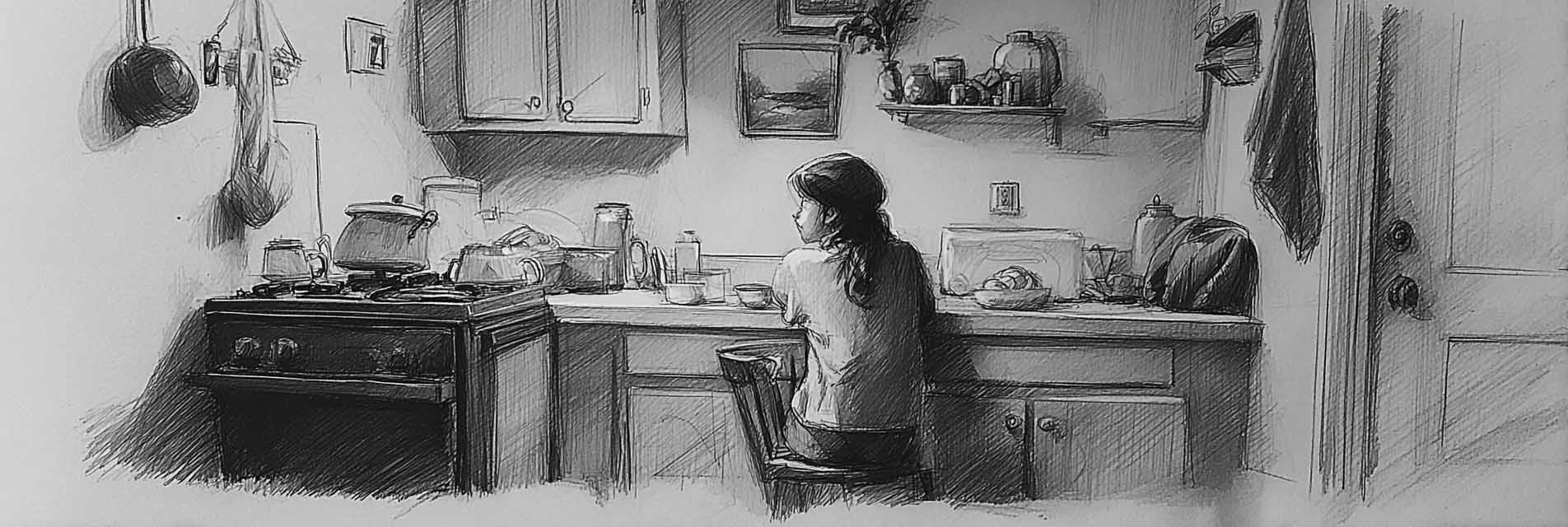
She begins running—not from rebellion, but from unprotected danger.
Phase 3: The Degrading Orbit (Ages 15–17)
Goal: Make it through another day
The trauma begins stacking.
She posts hope sometimes:
“A very bright beautiful vibrant life is what I see for myself.”
Within days, the hope collapses into despair:
“Ain’t wanna feel shit no more.”
And then into silent self-harm resistance:
“Tryin to keep my head above water n my hand away from the blade gets hard asf but I’m doin it for now.”
She is signaling crisis over and over.
- To teachers.
- To adults.
- To the agency.
- To the whole world.
No one answers.
Her grief spikes around her father’s death anniversary:
“As the 28th gets closer I loose myself more n more every sec.”
There is no intervention plan.
No therapeutic grief support.
No stabilizing adult.
At 17, she is drifting through placements, violence, and school instability, carrying trauma in silence.

Phase 4: The Cliff (Age 18)
Goal: There is no goal. She ages out.
Her birthday does not mark adulthood. It marks expiration.
She is handed a trash bag and a few options: call someone, find a couch, find a friend.
Her housing plan falls apart. Her money is stolen. She has nowhere to go.
And the system, which raised her from age 7 to age 18, tells her:
“We don’t do placement after they’re 18.”
She clings to the only connection left—her caseworker’s van.
Phase 5: The Breakdown in the Car (October 4, 2023)
Goal: None. Only panic. Only abandonment.
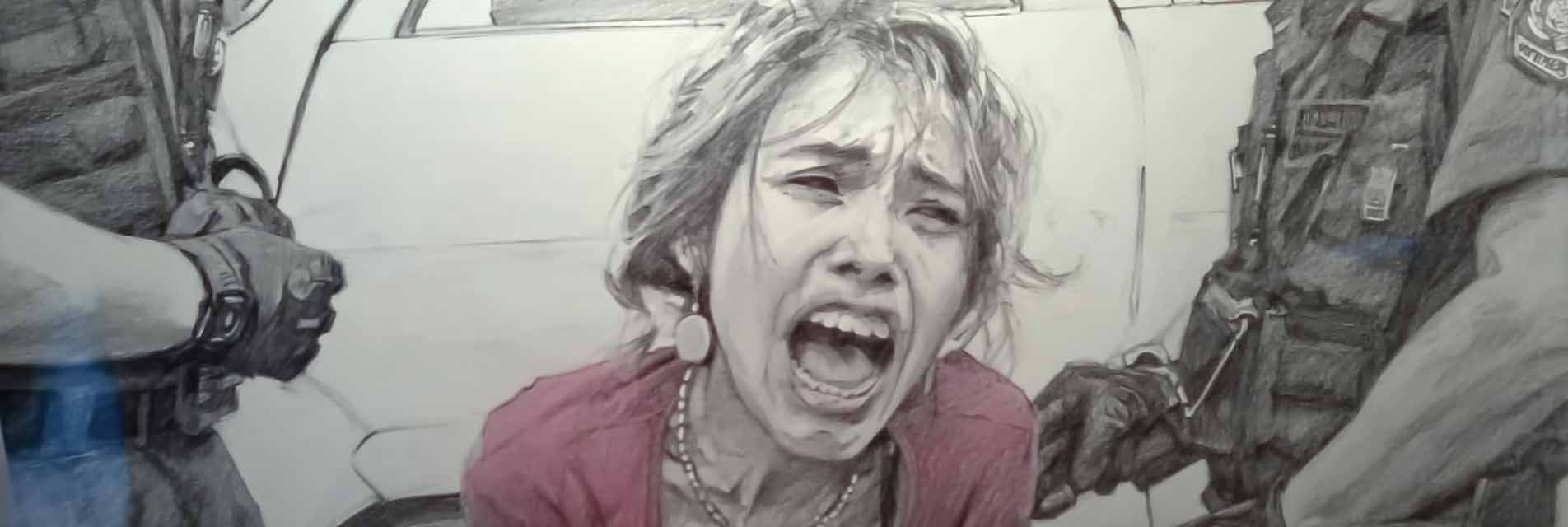
The officer knocks on the van door.
“Ma’am, we need you to step out.”
She curls inward, shaking, trapped between adulthood she is not ready for and a system that has already disowned her.
“I need you to leave me alone.”
Her voice cracks. They keep asking her to get out.
Finally, with her face in her hands, she says the truest sentence of her life:
“I don’t have anybody.”

The caseworker repeats it to the officer—flat, factual, defeated:
“She told me that. She said, ‘I don’t have anybody.’ I don’t know what to tell you.”
There is no alternative placement.
- No contingency.
- No stable adult.
- No plan.
Her “resistance” is not defiance.
- It is abandonment panic.
- It is a trauma response.
- It is the physical manifestation of twelve years of no one staying.
They pull her out of the van.
She hits her head.
She leaves the system the way she lived in it:
alone, confused, and criminalized.
Phase 6: The Spiral (Ages 19–21)
Goal: Survive the void post-system
After the arrest:
- charges
- homelessness
- running
- failure-to-appears
- more arrests
- more instability
Her brother—one of the only humans she loved—dies at 19.
She writes:
“Idk who tf I am anymore.”
And why would she?
Identity forms through continuity—through people who stay long enough to reflect you back to yourself.
She had none.
She posts to her dead father:
“I just wanna make u proud but this shit ain’t easy.”
She is fighting every day. But she is fighting alone.
Conclusion: The Real Variable
In this timeline:
- Her father died.
- The system failed to witness her.
- Foster homes failed to protect her.
- Social media posts were ignored.
- Self-harm disclosures were unseen.
- A crisis warning the day before her arrest went unflagged.
At 18, her case file closed and her support evaporated.
When she said, “I don’t have anybody,” it was not a dramatic line.
It was a literal truth.
And she was arrested for being alone.
This is not the story of a “menace.”
It is the story of a child who walked twelve years through a system without a single continuous presence—and then stepped into adulthood with nothing but a trash bag of clothes and the echo of her own sentence:
“I don’t have anybody.”
“The Advocate”
Activation Date: Age 7 (Following father’s death)
Device: Secure smartphone with “The Advocate” OS.
Core Directive: Documentation, Protection, and Opportunity Mapping.
Phase 1: The Anchor (Ages 7–10)
Goal: Preservation of Self
Real Timeline: Memories fade. She loses connection to her history.
Alternative Timeline:
- Age 7 (The Hand-off): The Advocate activates. It records her father’s voice from old videos she has and stores them in a “Vault” that foster parents cannot delete.
- Age 9 (Educational Stability): The Advocate detects she is moving schools again. It automatically generates a “Transfer Packet” for her new teachers, highlighting her reading level and her love for science, ensuring she isn’t placed in remedial classes by mistake.
Phase 2: The Attack & The Intervention (Age 14)
Goal: Crisis Management and Justice
Real Timeline: Daijah posts “I was tryna help n still the one u wanted to use as a punching bag.” No one responds. She runs away to escape the abuse, beginning her slide into homelessness.
Alternative Timeline:
- The Incident: A foster sibling or step-parent initiates physical violence.
- The Advocate Action (The “Silent Witness”): Daijah triggers the “Safety Mode” on her phone (a triple-tap feature).
- Recording: The phone goes dark but begins recording audio and video to a cloud server that cannot be accessed or deleted by the abuser.
- Documentation: After the event, the Advocate prompts: “Daijah, take photos of the bruises now. These are evidence. I am locking them in the Legal Vault.”
- Escalation: The Advocate doesn’t just post to Facebook. It sends a “Level 1 Priority Alert” directly to her Guardian ad Litem (GAL) and the State Ombudsman, attaching the audio file of the attack.
- The Outcome:
- The GAL listens to the audio and files an emergency motion the next morning.
- Removal: Daijah is moved within 24 hours—not because she “ran away,” but because she was a victim of a documented crime.
- Empowerment: Instead of feeling helpless, Daijah sees that the system worked for her. She realizes her voice (and evidence) has power.
Phase 3: The Resume & The Congressional Award (Ages 15–16)
Goal: Channeling Trauma into Achievement
Real Timeline: She engages in fights and gets labeled “defiant.”
Alternative Timeline:
- Age 15 (The Gold Medal Track): In her new, safer placement, the Advocate encourages her to channel her “fight” into the Congressional Award.
- Physical Fitness: “You survived a fight, Daijah. Now let’s train.” She logs 200 hours of track and field.
- Voluntary Public Service: The Advocate connects her with a program for at-risk youth. She mentors younger kids. The Advocate logs 400 hours.
- Personal Development: She learns coding (to understand the Advocate itself).
- Age 16 (The Expedition): For her Congressional Award Expedition, she organizes a group hike in the Organ Mountains.
- Result: She earns the Congressional Award Gold Medal. She receives the medal at a ceremony in Washington D.C. (funded by the award program). This trip exposes her to the East Coast and the idea of college as a reality.
Phase 4: The Application (Age 17)
Goal: QuestBridge & Holy Cross
Real Timeline: She drops out/is pushed out of high school.
Alternative Timeline:
- The Selection: The Advocate analyzes her profile: High resilience, strong moral center (“I have morals n priorities”), Gold Medalist, Catholic background (from family history).
- Advocate Suggestion: “Daijah, look at the College of the Holy Cross. Their motto is ‘Men and Women for Others.’ They value resilience and faith. They are a QuestBridge partner.”
- The Essay: She struggles to write her personal statement.
- Advocate Assist: “Daijah, open the ‘Vault.’ Listen to your entry from when you were 14, after the attack. Write about how you stood up for yourself legally. Write about how you broke the cycle.”
- The Result: She submits her QuestBridge National College Match application, ranking the College of the Holy Cross as her #1 choice.
- Match Day: She matches. Full four-year scholarship (tuition, room, board) to Holy Cross in Worcester, Massachusetts.
Phase 5: The Transition (Age 18)
Goal: Safe Passage
Real Timeline: “I don’t know what to tell you.” (Caseworker abandons her).
Alternative Timeline:
- June 2025: She graduates high school.
- July 2025: The “gap” month where she would have been homeless.
- Advocate Action: The Advocate coordinates with the Holy Cross “Odyssey Program” (a transition program for first-generation students). It arranges for her to fly out early for a summer bridge program.
- The Departure: She doesn’t leave with a trash bag. She leaves with a rolling suitcase provided by the “Advocate Fund,” filled with winter coats for the Massachusetts weather.
Present Day: December 2025
Status: Sophomore at the College of the Holy Cross
Major: Psychology with a concentration in Peace and Conflict Studies
Current Situation:
- Location: Worcester, MA. She is watching the snow fall—not from a street corner, but from her dorm window in Hanselman Hall.
- Activity: She is studying for finals. Her Advocate app is still active, but now it operates in “Mentor Mode,” reminding her of office hours and managing her calendar.
- Identity: She is known on campus as the student who “overcame.” She writes for the college newspaper.
- Trauma Integration: She attends counseling at the college’s health center (scheduled by the Advocate). She has processed the attack at 14 not as a moment of shame, but as the moment she learned to use the law to protect herself.
The Contrast
| Feature | Real Timeline | Advocate Timeline |
|---|---|---|
| Response to Attack | Ignored; Ran away; Criminalized | Documented; GAL Notified; Protected |
| Achievement | Survival; Street Smarts | Congressional Award Gold Medal |
| College | None (GED pending) | College of the Holy Cross (Full Ride) |
| Financial | Destitute | QuestBridge Scholar (Zero Debt) |
| Self-Concept | “Broken,” “Alone” | “A Woman for Others” (Holy Cross Motto) |
Conclusion
In this timeline, the system didn’t “fix” Daijah—she didn’t need fixing. She needed witnessing.
When she was attacked, the Advocate witnessed it and forced the legal system to act.
When she did good works, the Advocate witnessed it and converted it into a Gold Medal.
When she applied to college, the Advocate helped her articulate that her trauma was actually a PhD in resilience.
She is now walking the slopes of Mount St. James at Holy Cross, a living testament to what happens when technology is used to amplify the voice of a child rather than silence it.